
Kaspressknödel: Tyrolean culture you can taste (including recipe!)
A recipe for real Tyrolean Kaspressknödel?
Patrick looks unconvinced. Almost as if he had been asked to measure the wind or weigh the mountains. As a Tyrolean—and a chef at that—he prepares Kaspressknödel the way they are meant to be made, just as they have always been in the Zillertal and elsewhere in Tyrol: by instinct.
It takes some convincing before Patrick finally reaches for the long-forgotten kitchen scale. What follows is a lively discussion about history and origins, about perfect side dishes and culinary “sins,” and the question:
Where can you find the best Kaspressknödel in the world?
The answer may surprise you: at Hotel Eden, we can only serve the second-best Kaspressknödel on the planet. The absolute best Kaspressknödel are found at the Gamshütte. Probably because the breathtaking impressions of the hike also become part of the tasting experience on the alpine hut.
But back in the Eden kitchen, Patrick finally starts weighing out the long-lost ingredients.
The Zillertal national dish: Kaspressknödel
Kaspressknödel are many things—but one thing for sure is that they are not subtle. When frying, they release a very distinctive aroma that can sometimes reach the neighbors. “Spicy,” we say. “Strong,” others might call it.
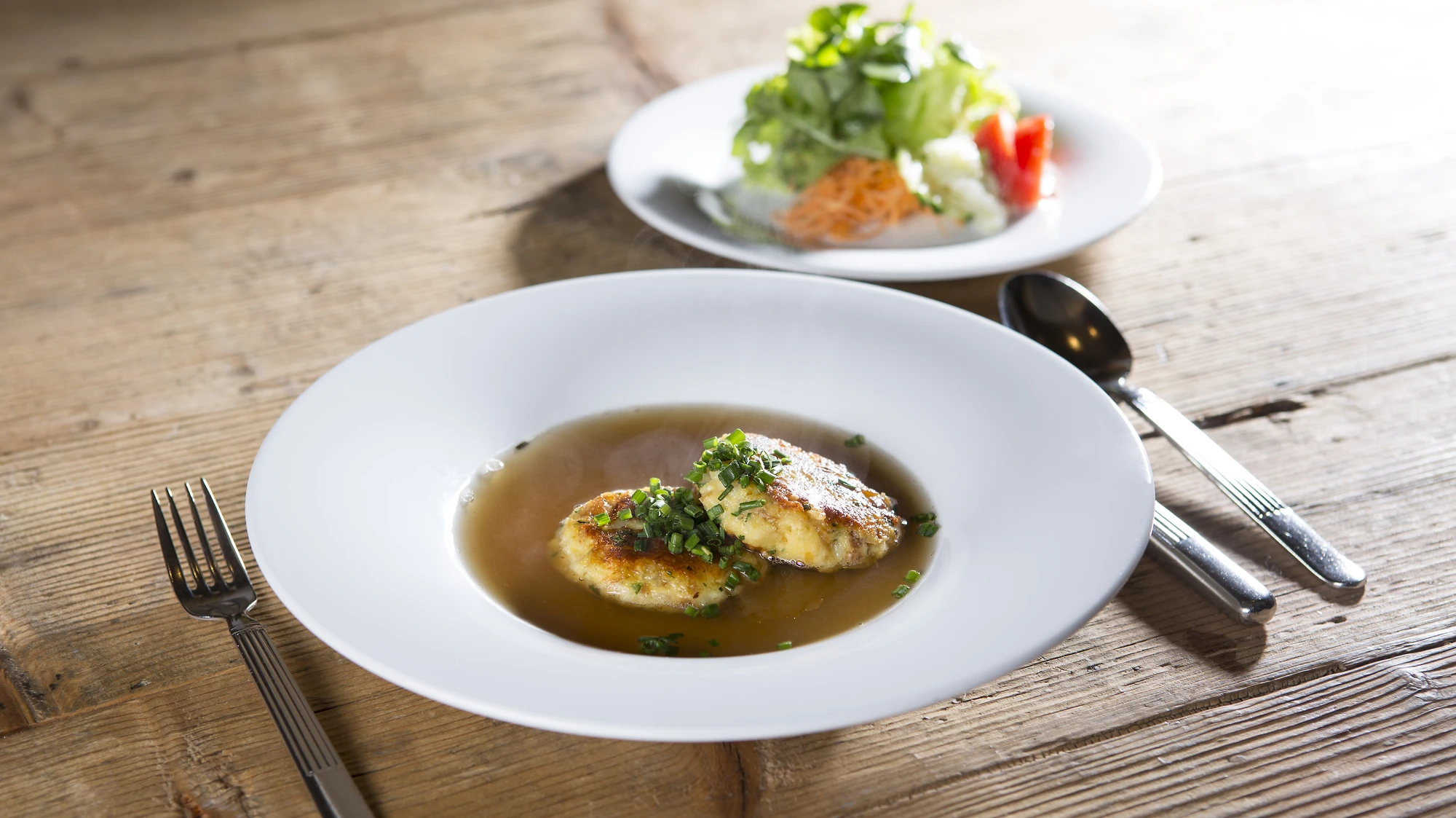
Even visually, there is no way around it: Kaspressknödel are flat, brown patties that stretch long cheese strings when cut open. So why have the people of the Zillertal chosen this “Zerggl” as the unofficial culinary symbol of their cuisine?
The answer is simple: the magic reveals itself in the first bite. This combination of texture and aroma is powerful and hard to describe. A Kaspressknödel is more than the sum of its ingredients—and that has to do with its history.
Especially with one ingredient that deserves its own story:
The legend of the smelly “poor man’s cheese” that runs away
Graukäse is a chapter of its own. Its exact origin is unclear, but even Celts and Romans likely knew similar forms. In more recent times, it was considered food for the poor and looked down upon by higher society.
Graukäse is made from soured skimmed milk, a byproduct of butter production. If aged too long, it can even become semi-liquid—almost “melting away.” Patrick believes this might be how Kaspressknödel were invented: nothing was ever thrown away, not even cheese.
Today, Graukäse is an EU-protected delicacy.
Patrick now weighs out exactly 130 grams. Another 130 grams of mountain cheese are added. Then a generous piece of clarified butter melts in a cast-iron pan, and the “Zerggl” are fried until golden. It takes time—but otherwise, they would almost qualify as fast food.
How to eat Kaspressknödel—and how not to
Now comes the big decision:
Should Kaspressknödel be served on a fresh salad, in a rich beef broth, or alongside sauerkraut?
Patrick also prepares some sauerkraut as a side option.
One culinary sin, however, is non-negotiable:
Never cover Kaspressknödel in sauce. Whoever does so risks being banned from alpine huts forever.
A Kaspressknödel deserves respect—it is a true piece of Tyrolean culture you can eat.
Zillertal Kaspressknödel – the original recipe from Tux
Ingredients (for 4 people):
- 150 g bread for dumplings
- 1 large chopped onion
- 1 garlic clove, chopped
- 125 ml milk
- 130 g grated mountain cheese
- 130 g Graukäse
- 1 boiled potato
- 2 eggs
- 2 egg yolks
- Olive oil
- Chives, parsley, salt, pepper, nutmeg
Preparation:
Heat the milk, season with salt, pepper, and nutmeg, and pour over the bread. Sauté onion and garlic in olive oil and mix with the remaining ingredients. Set aside some cheese for topping. Season the mixture and shape small patties. Fry them in clarified butter until golden brown on both sides, gently pressing them flat.
Serve with green salad, sauerkraut, or in a rich beef broth.
We wish you lots of joy and success in recreating this dish!